Skip to content

04 — Development

How a project actually runs.

Six stages, in order, with the client involved at each one. It's the same backbone whether we're shipping an application, treating a hall or running a research programme — only the deliverables change.

Step 01

Discover

We start by learning about you, the challenge, the intended audience and the desired result — so the project is based on genuine needs rather than assumptions.

  • Stakeholder conversations
  • Requirement gathering
  • Audience and environment review
  • Success criteria agreed upfront
Step 02

Plan

We set a clear project direction: the recommended solution, features, scope, priorities and implementation approach.

  • Solution recommendation
  • Scope and feature definition
  • Priority sequencing
  • Timeline and milestones
Step 03

Design

We shape the technical, visual, acoustic or strategic elements. Every decision is made with usability, performance and long-term value in mind.

  • Interface and experience design
  • System and data architecture
  • Acoustic layouts and materials
  • Campaign and messaging design
Step 04

Develop & implement

We turn the approved plan into a working solution — whether that's an AI system, an application, an acoustic installation plan, a campaign or a research project.

  • Iterative build cycles
  • Integration with existing systems
  • Installation and rollout planning
  • Progress visible throughout
Step 05

Test & refine

Before final delivery, the solution is reviewed and refined to confirm it meets the agreed requirements and performs properly.

  • Functional and usability testing
  • Performance and security checks
  • Acoustic verification on site
  • Revisions against agreed scope
Step 06

Support & improve

Where required we provide continued guidance, maintenance, monitoring and improvement, so the solution keeps its value as your needs evolve.

  • Maintenance and monitoring
  • Training and handover
  • Performance reviews
  • Iterative improvements

Engineering practice

Software that survives contact with the business.

We build solutions around your specific requirements instead of forcing the business to operate within the limits of generic software. That means the boring parts — usability, performance, security, scalability — get decided early, while they're still cheap to change.

Custom application development
Developers reviewing an application architecture
Build reviewIN PROGRESS
An application taking shape across its component systems
From concept to componentBUILD PHASE
01

Discovery to deployment

We stay on one project from the first conversation to the day it goes live — and beyond, where support is part of the scope.

  • Requirements and scoping
  • Interface and system design
  • Build, integrate, test
  • Deployment and handover
02

Built to be maintained

Performance, security and scalability are decided during design, not patched in afterwards. Documentation and training come with the build.

  • Security-first architecture
  • Scalable data structures
  • Written documentation
  • Team training and handover
03

AI where it earns its place

We integrate AI into applications when it removes real work — assistants, automated processing, intelligent search — not as a feature badge.

  • Embedded assistants
  • Automated document handling
  • Smart search and retrieval
  • Workflow triggers
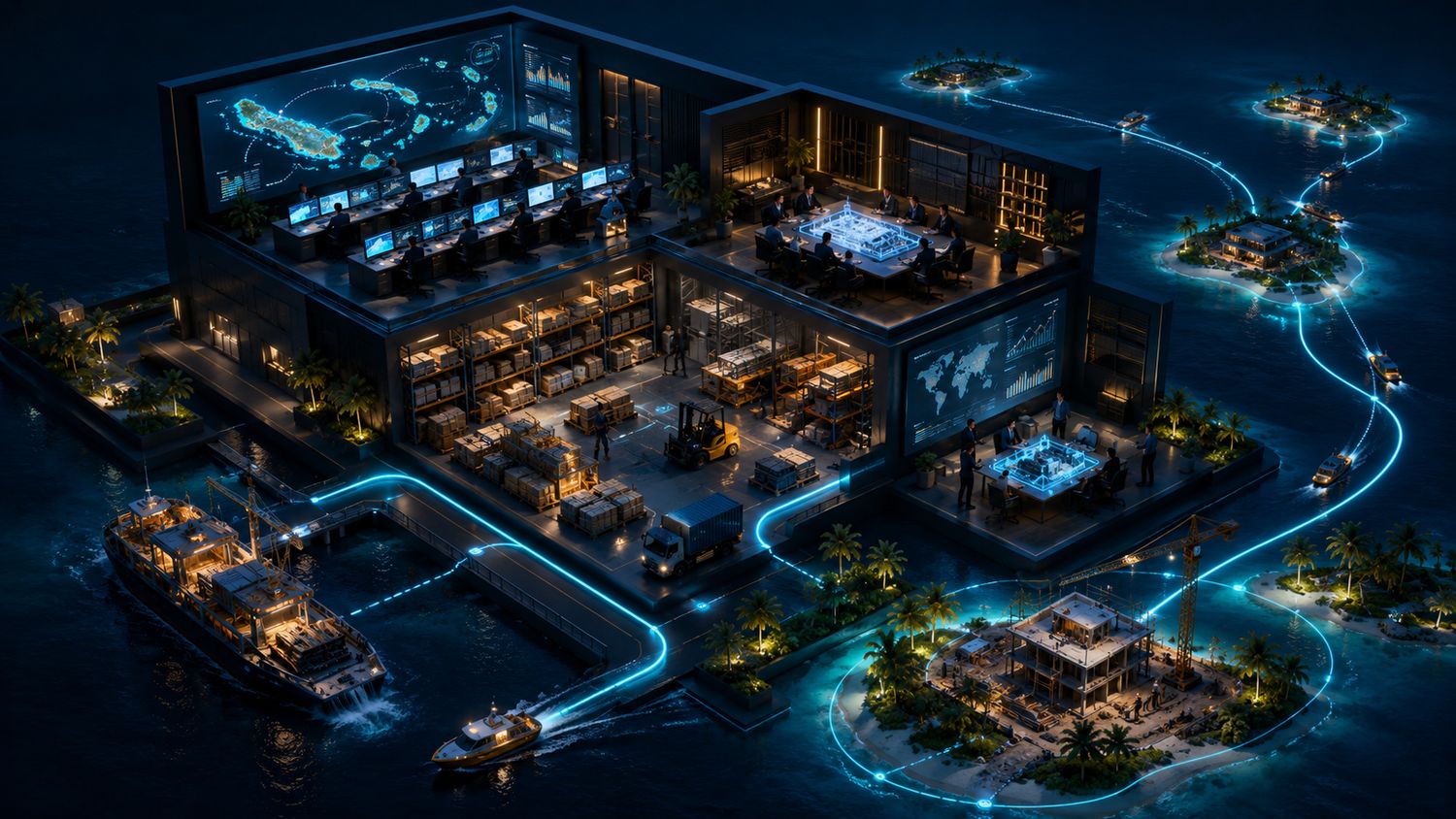
Coordinating an island-wide installation and delivery programme
Site & logisticsISLAND-WIDE

Beyond software

The same process, applied to rooms and campaigns.

An acoustic installation follows the identical arc: assess the space, plan the treatment, design the layout, install, verify the result on site, then support it. A marketing campaign does too — research the audience, plan the message, design the assets, launch, measure, refine.

Running one process across every discipline is what lets a single project touch several of them without falling apart in the handovers.

Let's build something

Tell us the problem.
We'll design the solution.

Whether it's an AI assistant, a custom platform, a quieter office or a sharper brand — start with a conversation. No obligation, no jargon.